My background
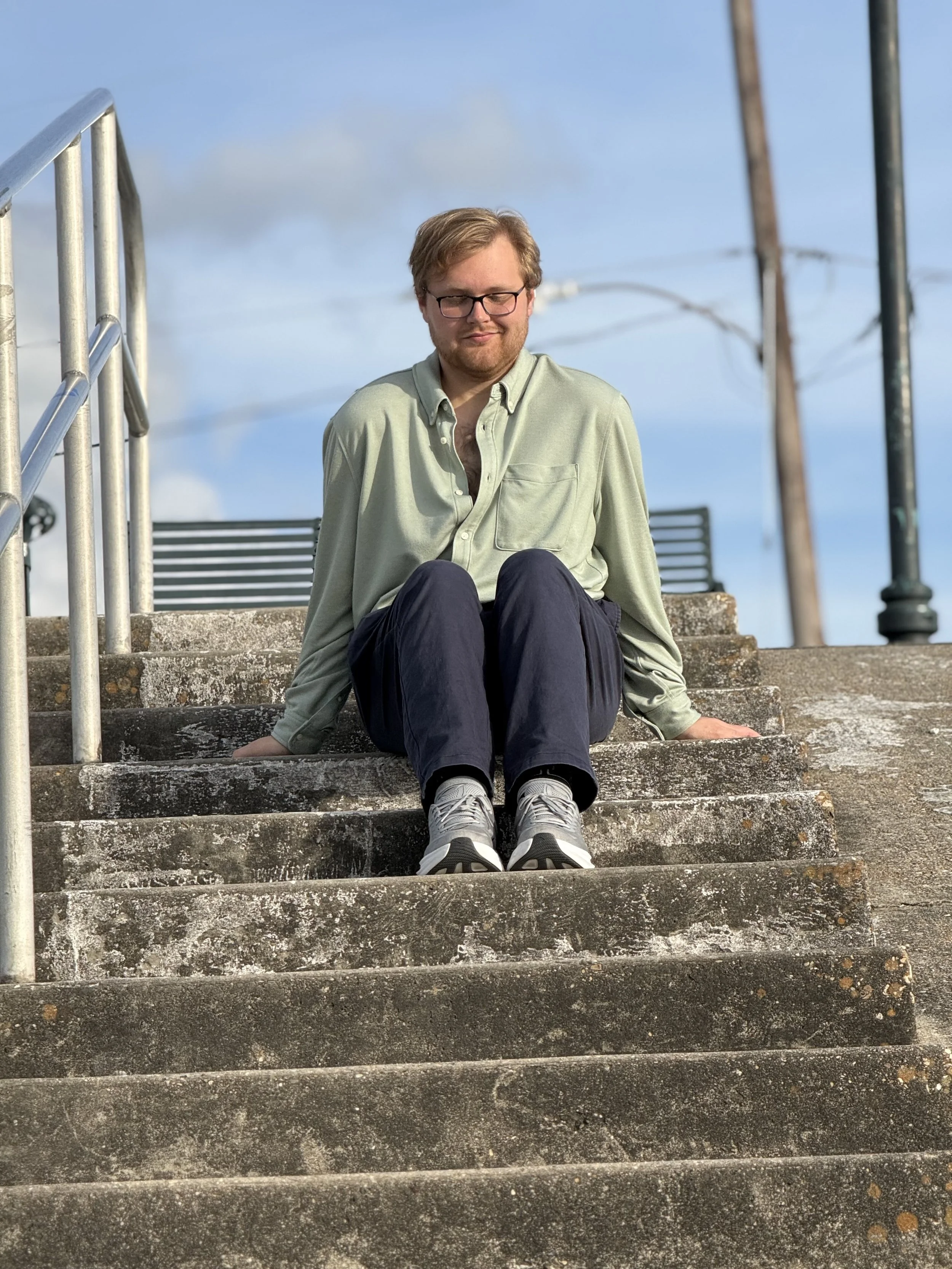
Eli Boudreaux is a musician from New Orleans, Louisiana. He graduated from Louisiana State University in 2023 with a Bachelor of Music in Trombone Performance. In 2025, Boudreaux graduated from the University of Georgia with a Master’s in Trombone, studying under Dr. Joshua Bynum.
Currently, Eli is back at LSU for an MM in composition, studying with Dr. Mara Gibson and Dr. Brian Nabors. He additionally serves as a graduate assistant for the composition studio and the LSU School of Music Admissions office.
As a composer, Eli has written for many settings, including solo works, chamber music, works for voice, and large-ensemble works for orchestral and wind ensembles. He draws inspiration for his compositions from his experiences as a performer and from his fellow musicians. In recent summers, he has attended the Collaborative Piano Institute Composers Intensive, Vienna Contemporary Composers Festival, and the Imani Winds Chamber Music Festival.
With a passion for bringing classical music to local communities, Boudreaux serves as program manager and social media coordinator for the Louisiana Art Music Collective.
My role in Academia
Teaching Philosophy
As teachers, our primary objective is to equip students with the knowledge and skills necessary for success in their chosen fields. In my instruction in theory and composition, I use pedagogical strategies that support students both in the practice room and throughout the compositional process. Creating a safe, supportive classroom environment is essential to achieving this aim. While it is important to maintain high standards for university students, I believe instructors must also demonstrate understanding, consistency, and forgiveness. Students learn most effectively when they are not afraid to make mistakes. To foster this environment, I allow one forgiven homework assignment and one extension per semester. Serving as an approachable, supportive role model remains central to my teaching philosophy.
To foster creativity and engagement, I incorporate popular music into my classes. When teaching musical form, I present both the structures of popular songs and the classical sonata form. This approach connects with students' experiences with modern music and highlights the relationships between contemporary works and classical Western traditions. My teaching emphasizes the interconnectedness of music across genres and historical periods.
While high standards of excellence are essential for students, I believe the standards I set for myself as a teacher must exceed those expectations. For example, if I assign a counterpoint exercise intended as a one-hour homework assignment, I ensure that both I and any teaching assistants dedicate equal effort and commitment to reviewing and grading students' work. After assignments are graded and returned, students have sufficient time to review feedback from professors and teaching assistants and may submit corrected assignments for a higher grade. This practice supports the goal of helping students learn from their mistakes and achieve a comprehensive understanding of the material.
The field of composition is among the most ambiguous areas of teaching. I often reflect on the question, “How do you teach composition?” It is not about dictating which notes or chords a student should use. Instead, teaching composition involves providing students with a comprehensive set of tools and the autonomy to create according to their own vision. This intersection is where my teaching of music theory and composition becomes especially significant. The concepts I teach in music theory serve as essential building blocks for students' work in composition classes.
Above all, teachers have the privilege of playing meaningful roles in their students' lives. It is important to recognize and uphold our responsibility to support students in achieving their future goals beyond the classroom.